Marcel Duchamp described the title of the artwork as an invisible color (Welchman, 1997), pigments that bypass the eye and speak directly to the mind. This formulation moves aesthetic experiences beyond visual input toward context. The label of an artwork, the narrative provided by the artist, the exhibition histories, all serve as extensions of this invisible pigment. They shape how we read, value, and even dismiss what is presented to our eye.
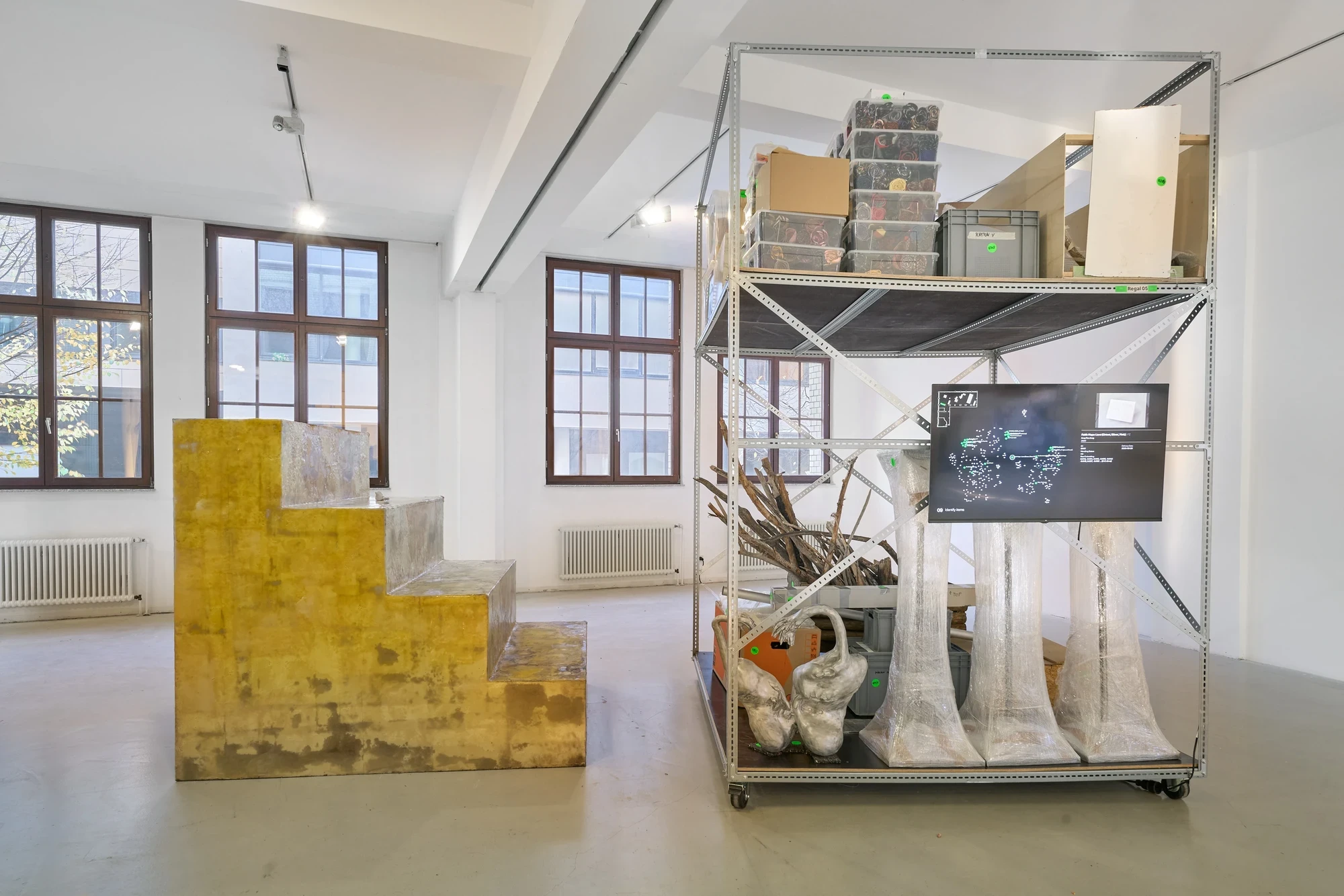
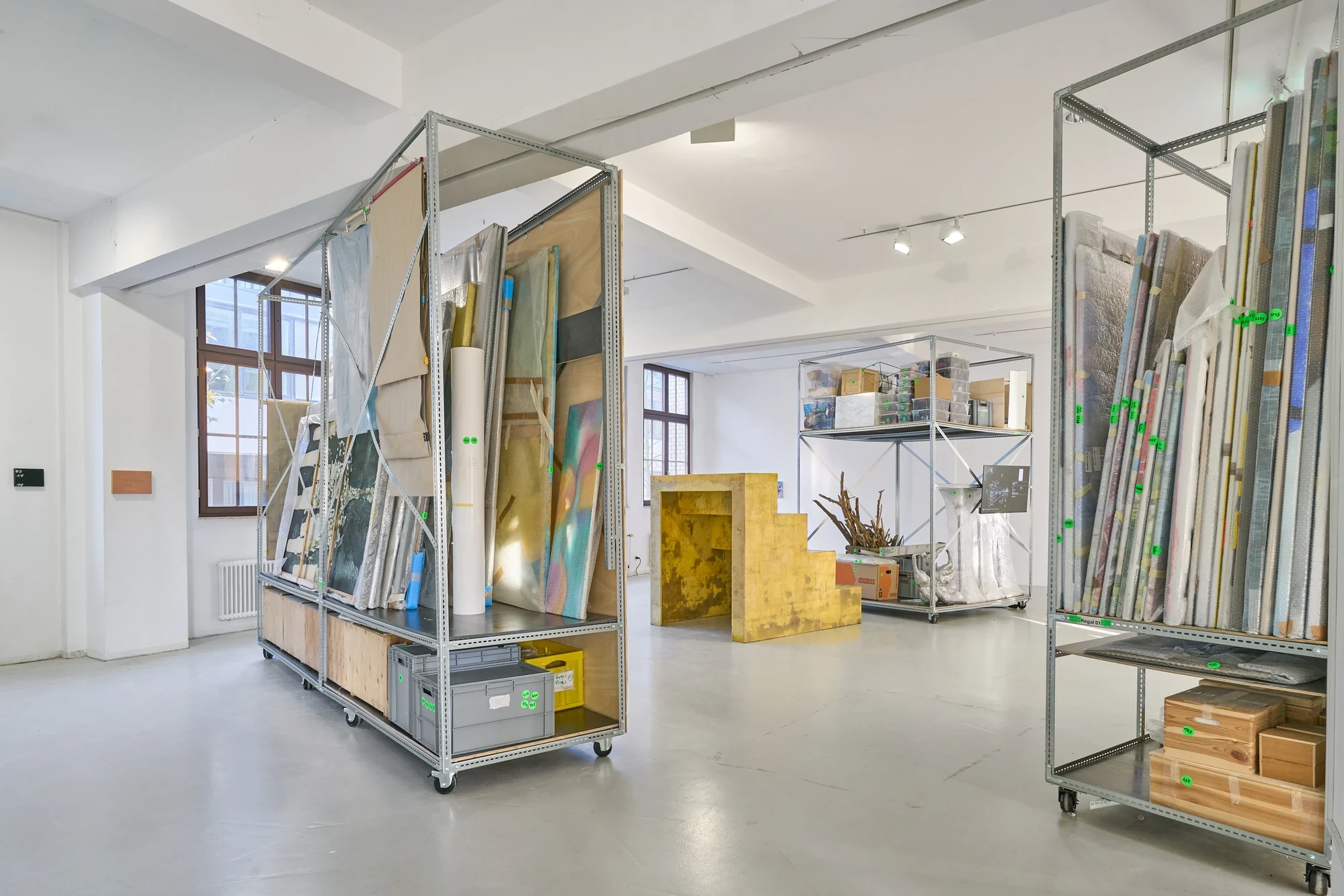
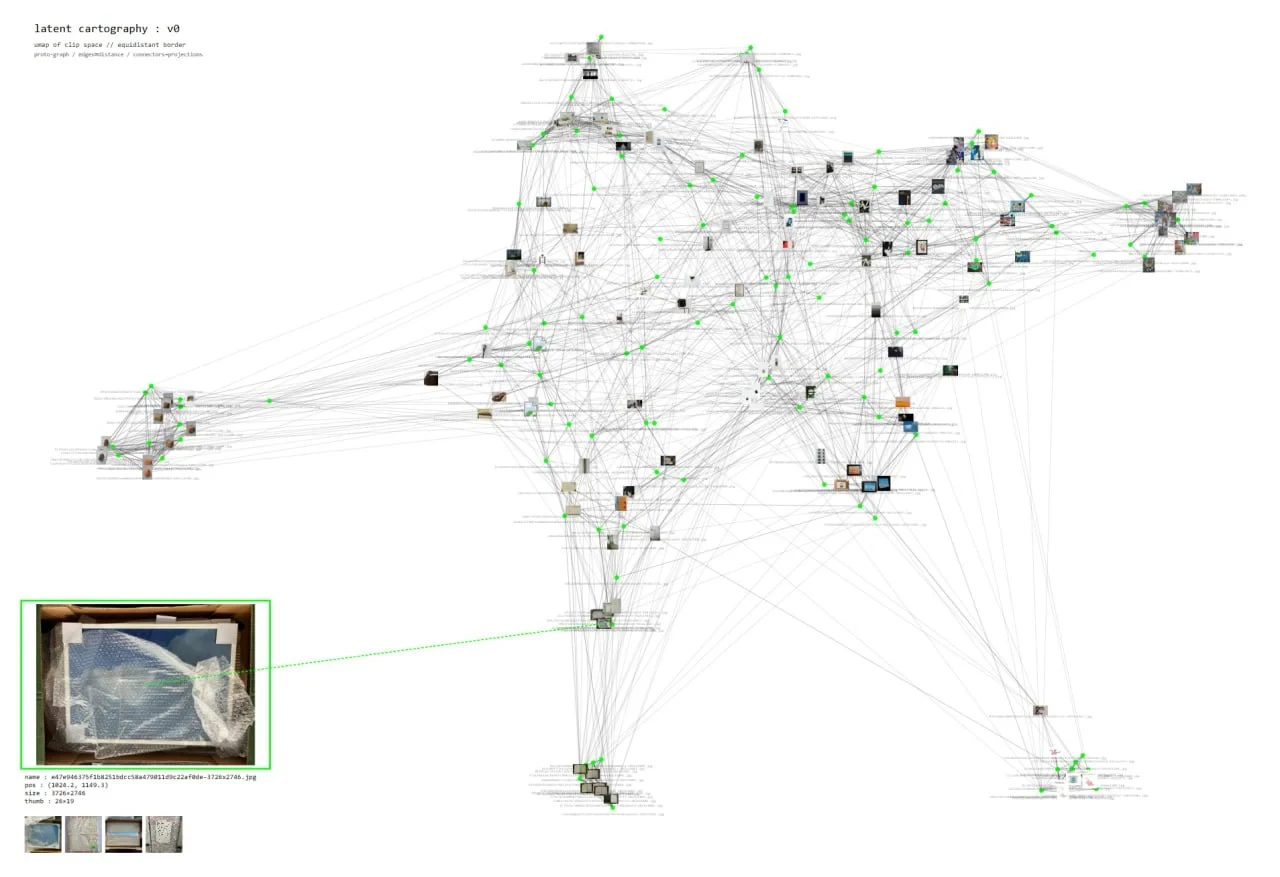
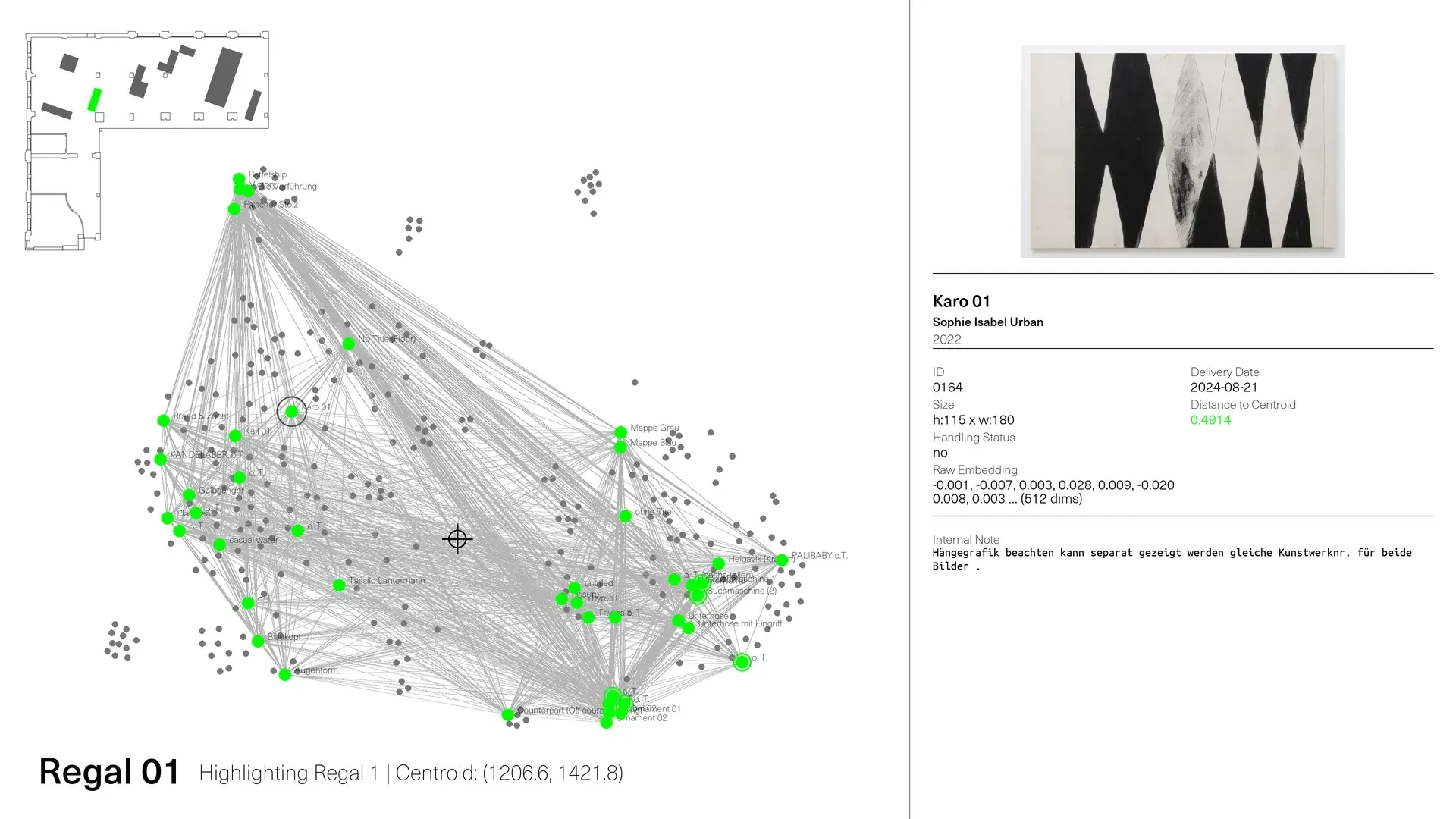
Storage Museum in Düsseldorf holds in time of the project 479 works, physically spread across 10 shelves, and digitalized as data represented by image, title, artist's name, size, and notes from the staff. This arrangement is serendipitous and serves as an archive of the staff’s expertise and labor, distilled into 10 shelves. We used embeddings as technical approach to curation, an AI technique that converts information into numbers that computers can compare. Similar method that enables tools like ChatGPT, Google search, and AI image generators, allowing machines to measure similarity and find patterns across different types of data. This process ran entirely locally, with no cloud services to keep the collection's data protected.
However, AI is simple. It finds mathematical correlations, draws lines between things that appear together. But correlation is not causation, and pattern constitutes no meaning. Data, however detailed, can never fully represent the physical objects or the embodied experiences working with them. AI is a tool, not a replacement for artistic practice and curatorial expertise. The algorithm offers one way to wander through the collection, discovering unexpected neighbors, and suggests: these things seem related, but it cannot tell you why or what that means.
A note for participating artists and visitors
What you are about to see is a collaboration between human decision-making and machine logic, an invitation to explore the Storage Museum's collections through a different lens.
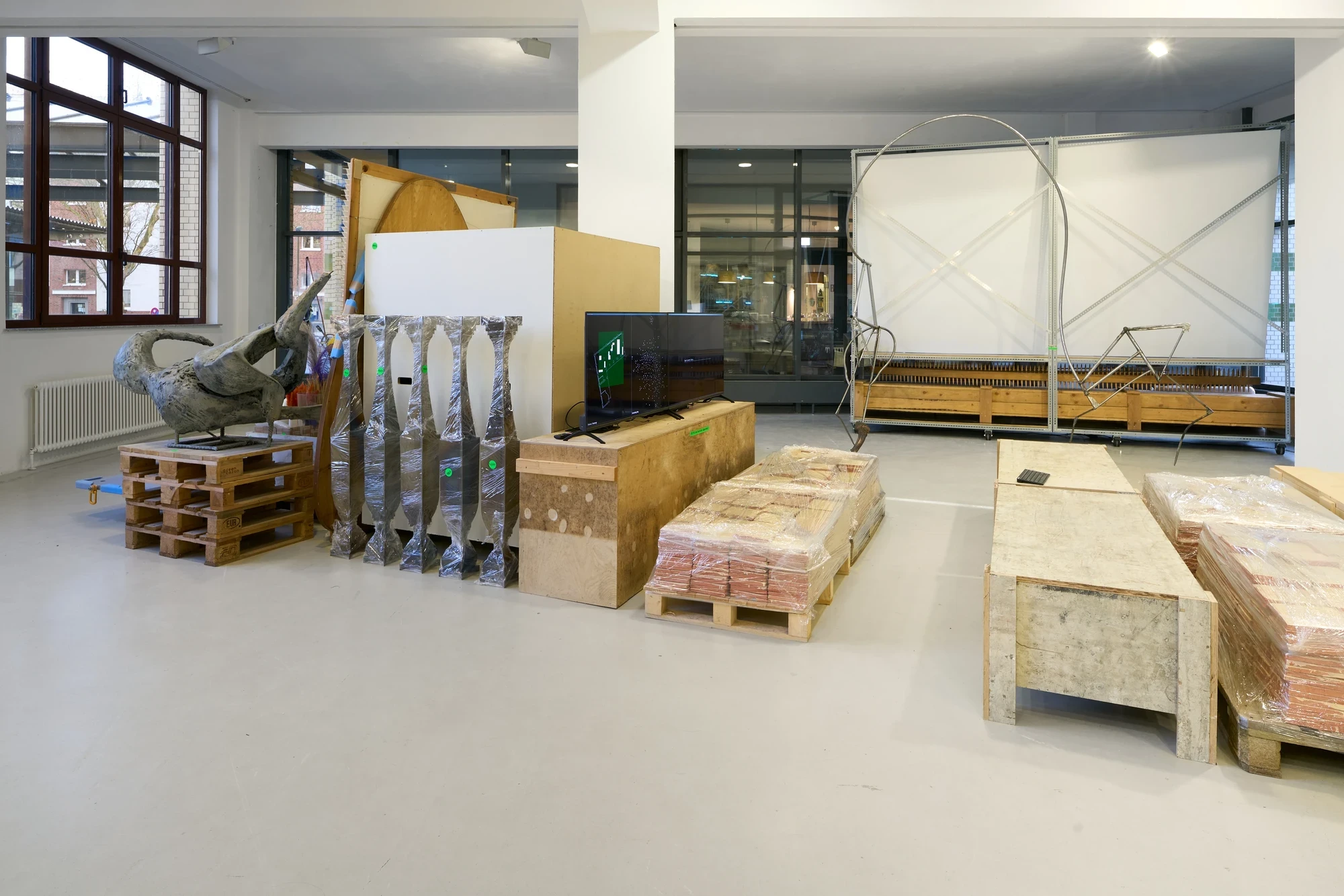
The museum currently holds 479 works, physically spread across 10 shelves, organized with a mix of logic and intuition. Some are measurable criteria: size, weight, entry date and materiality. Others emerge from embodied knowledge: how fragile an object is to move, how it's packaged, how often it's exhibited. This arrangement is serendipitous and serves as an archive of the staff’s expertise and labor, distilled into 10 shelves.
This order is not arbitrary. It reflects careful handling, countless small decisions, and the accumulated knowledge of the people who work with these objects. We therefore want to thank the Storage Museum staff: Sabrina Podemski, Natascha Maier, Tobias Hohn, Melissa Heller, Chiara von Wille, Stella Osen, and Madita Wischer. Without their participation, this would remain just a calculation. They animate the collection and idea into a display.
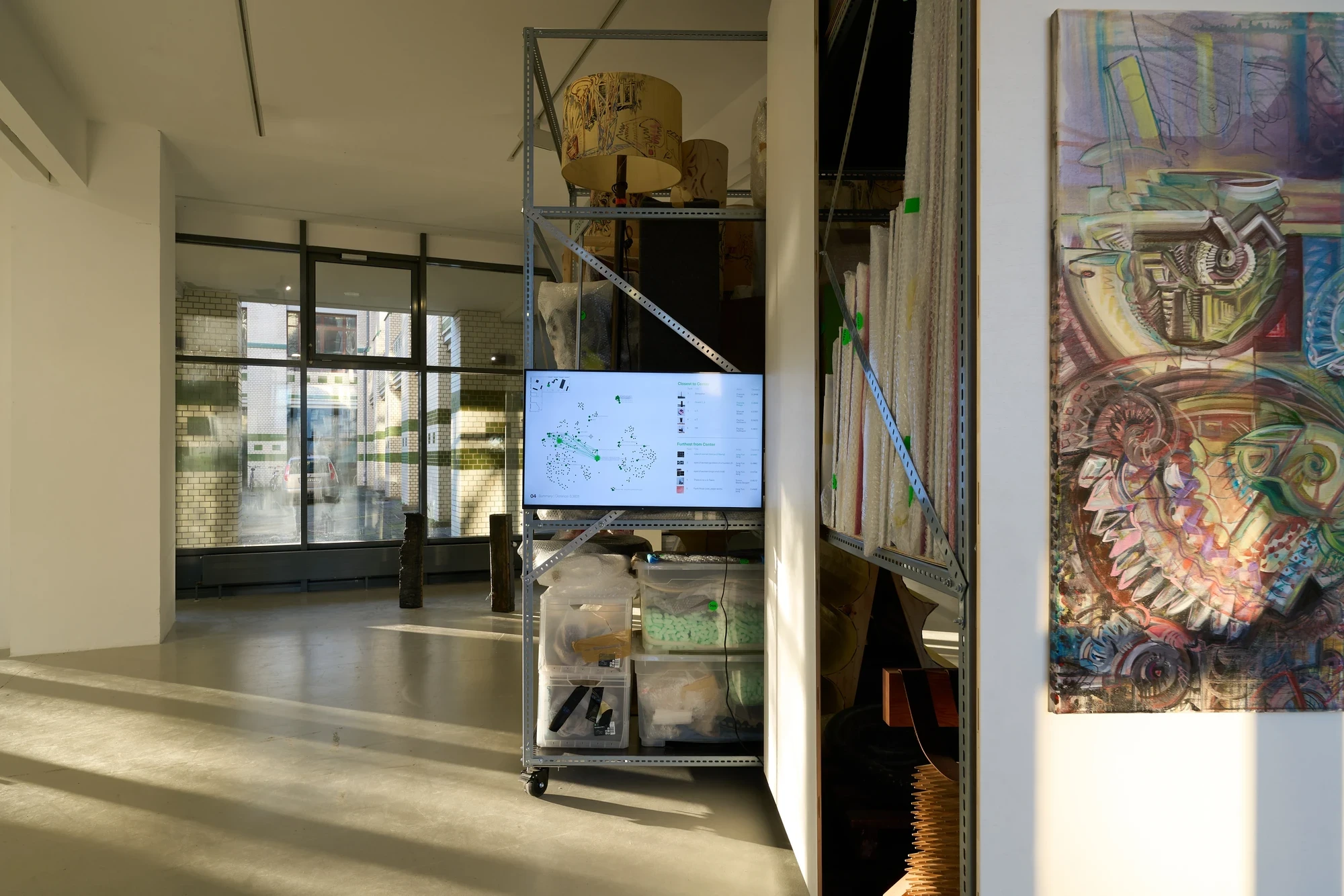
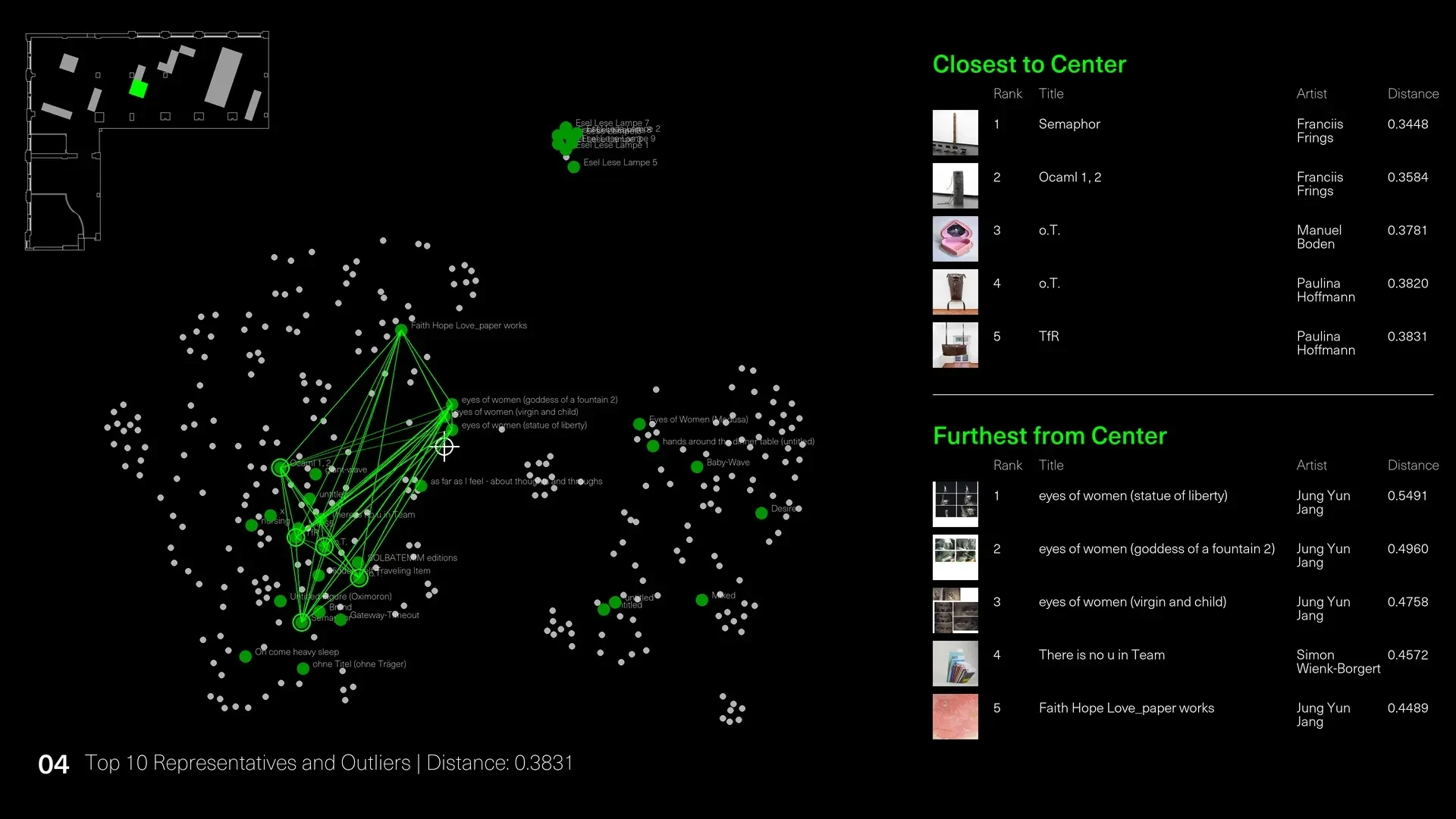
For the technical approach, we used embeddings, a foundational AI technique that converts information, such as text and images, into numbers that computers can compare. The embedding model is pre-trained with a vast amount of online images and text combinations. This is the same method that enables tools like ChatGPT, Google search, and AI image generators, allowing machines to measure similarity and find patterns across different types of data, and potentially make predictions from it. Each artwork (represented by its image, title, the artist's name, size, and notes from the staff) receives coordinates on a map, where similar items end up closer together. We could then see which works sit closest to the center of their shelf and which seem isolated from their neighbors in this virtual space. This process ran entirely locally, with no cloud services to keep the collection's data protected.
However, AI is simple. It finds mathematical correlations, draws lines between things that appear together. But correlation is not causation, and pattern constitutes no meaning. Data, however detailed, can never fully represent the physical objects or the embodied experiences working with them. AI is a tool, not a replacement for artistic practice and curatorial expertise. The algorithm offers one way to wander through the collection, discovering unexpected neighbors, and suggests: these things seem related, but it cannot tell you why or what that means.
It is people who hold the power of projecting meaning into the constellation. We invite you to make your own connections, trust your own interpretations, and bring your human sense-making to the experiences you have.
Only you can decide what matters.
Ting & Leon